





Malting is the centuries-old craft of turning raw grain into malt, the foundation of every great beer and spirit. Through a series of carefully controlled steps, the grain is encouraged to germinate, develop natural enzymes, and transform its starch reserves into flavours and sugars that brewers and distillers can unlock during mashing.
01. Grain Selection
The process typically starts with two-row barley, although wheat, rye, and other cereals can also be malted. Ideal malting grains are clean, uniform, and capable of strong germination. Key characteristics such as kernel size, moisture content, protein level, and varietal genetics determine how evenly the grain will steep, germinate, and modify.
Barley grown in the dry, temperate climate of the Canadian Prairies tends to produce plump, uniform kernels with ideal protein and starch balance for malting. Careful grain selection ensures consistent enzyme potential, extract yield, and flavour development throughout the malting process.

02. Steeping
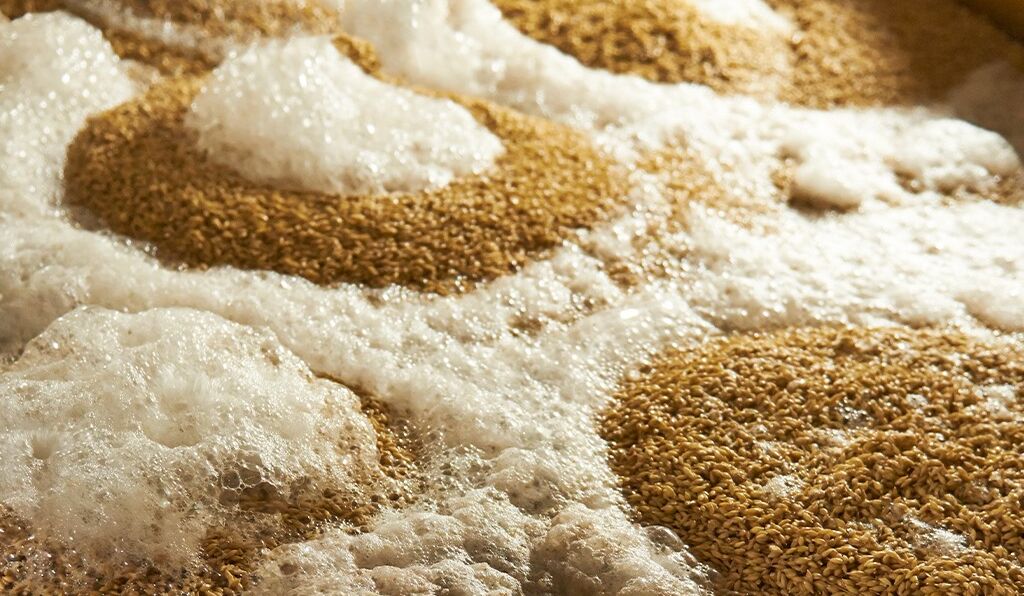
The barley is alternately soaked in water and drained in air-rest cycles, allowing it to absorb both moisture and oxygen. As the kernels hydrate, typically reaching 42 to 46 percent moisture, they swell by roughly one third and the embryo becomes metabolically active.
Respiration increases, releasing carbon dioxide and heat, which must be managed through aeration and water changes. Steeping also cleanses the grain, washing away dust, microorganisms, and husk compounds that could inhibit growth. Proper control of oxygen, temperature, and timing ensures uniform hydration and healthy early growth across every kernel.

03. Germination
The barley is held under controlled temperature, humidity, and airflow for four to six days. During this time, the embryo grows, rootlets emerge, and the internal shoot, called the acrospire, extends within the kernel.
Inside the grain, enzymes develop and begin breaking down the cell walls, proteins, and starches of the endosperm. This transformation, known as modification, prepares the grain’s starch reserves for conversion into fermentable sugars during mashing. Germination must be carefully balanced. Temperature, oxygen, and moisture are managed to encourage enzyme formation while preventing overheating or uneven growth. When the desired level of modification is reached, germination is halted by drying the malt in the kiln.

04. Kilning
The green malt is gently dried in two main phases. The first is a rapid drying that reduces moisture from about 44 percent to around 12 percent. The second phase is slower and brings it down to roughly 4 percent. Controlled warm air is circulated through the malt bed to remove moisture while preventing overheating.
Beyond simply halting growth, kilning shapes the malt’s final character by developing colour, aroma, and flavour through heat-driven Maillard reactions that create toasty, biscuity, or honey-like notes. Enzyme activity is also influenced by temperature. Some enzymes are preserved to support brewhouse performance, while others diminish as kilning temperatures rise. The result is stable, friable malt ready for storage or further roasting, with each temperature schedule contributing its own distinctive sensory profile.
05. Roasting
Fully dried malt is transferred to rotating drum roasters, where it is heated at carefully controlled temperatures that can exceed 200 degrees Celsius. The intense heat drives caramelization and Maillard reactions, forming compounds that create notes of caramel, toffee, biscuit, chocolate, or coffee, depending on the roasting profile.
As temperature and time increase, the malt darkens and enzyme activity is completely destroyed, producing distinct types such as caramel, crystal, or roasted malts. These specialty malts are used in smaller proportions to add colour, flavour complexity, and body to a wide range of beers and spirits.
Get in Touch
Malting mimics the natural growth cycle of the grain by controlled soaking, sprouting, and drying to unlock the enzymes and starches needed for brewing.
Steeping is the first critical step where grain is submerged in water to raise its moisture content, waking up the kernel and triggering the biological processes for growth.
During this phase, the grain begins to sprout under controlled temperature and airflow, breaking down protein and cell walls to make the internal starches accessible for the brewer.
Kilning uses heat to stop growth and dry the grain; higher temperatures and longer durations create the Maillard reaction, which develops deeper colours and complex flavours like biscuit, caramel, or chocolate.
Different varieties offer unique characteristics in terms of enzyme levels, protein content, and flavour profiles, allowing maltsters to tailor products for specific beer styles or distillery needs.
By precisely managing water, air, and temperature at every stage, a maltster ensures batch-to-batch consistency and the specific technical specifications required for high-quality craft production.
Grain Bin