



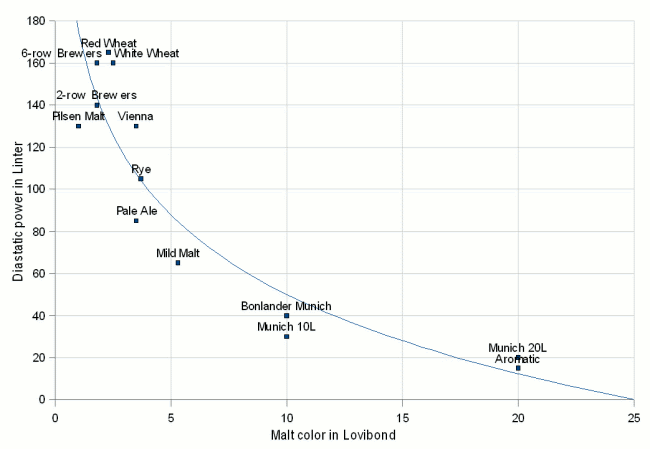
One of the more technical numbers on a malt analysis is diastatic power.
It sounds complicated, but the basic concept is straightforward: diastatic power tells a brewer how much starch-converting enzyme activity a malt provides.
Those enzymes play a critical role in turning grain into fermentable wort.
What Happens During the Mash?
Malted barley contains starch stored inside the kernel.
Yeast cannot directly ferment that starch. During mashing, naturally occurring enzymes in malt break the starch into smaller sugars.
Two of the most important enzymes involved are alpha-amylase and beta-amylase.
Diastatic power provides an overall measurement of the malt’s ability to carry out this conversion.
What Does Higher Diastatic Power Mean?
Generally, higher DP means the malt has more enzymatic capacity.
This does not automatically make it better.
A strong base malt may have considerably more enzyme activity than is required to convert its own starch. That excess capacity becomes valuable when the mash contains ingredients that contribute starch without providing enough enzymes themselves.
Common examples include corn and rice.
A brewer making an all-malt beer typically has less need for extremely high diastatic power because the base malt already contributes both the starch and enzymes necessary for conversion.
Why North American Malt Often Has Strong DP
North American malting barley has historically been selected partly for strong enzyme performance.
That made sense for a brewing industry that commonly used significant quantities of adjunct grains.
Today, craft breweries often produce all-malt beer, so the ideal malt profile may be different. The Brewers Association has noted that many all-malt brewers can work effectively with lower diastatic power than traditional North American adjunct brewing demanded.
Does DP Determine Mash Efficiency?
Not by itself.
Once there is enough enzyme activity to complete conversion, simply having more does not guarantee higher brewhouse efficiency.
Efficiency is also influenced by:
- malt extract
- milling
- starch structure
- mash temperature
- mash time
- pH
- equipment
- lautering performance
Brewers Association technical material also notes that starch structure, protein and mash conditions influence conversion and fermentation characteristics beyond what DP alone can predict.
When Does Diastatic Power Matter Most?
DP becomes particularly important when:
Using large amounts of adjunct grain: The malt needs enough enzyme capacity to convert starch from ingredients that bring little enzymatic power of their own.
Brewing high-gravity wort: More demanding mash conditions can make enzyme performance increasingly important.
Distilling: Grain bills containing significant quantities of corn, wheat, rye or other cereals can require highly enzymatic malt.
Troubleshooting conversion: DP is one of several specifications worth reviewing if starch conversion is inconsistent.
Read DP With the Rest of the COA
A very high DP number does not automatically mean you are looking at superior malt.
The best malt is the malt that provides enough enzymatic power for your recipe while also delivering the extract, protein, FAN, flavor and modification characteristics you need.
For breweries comparing Canadian base malt, diastatic power is an important specification to understand, particularly when recipes extend beyond straightforward all-malt brewing.
